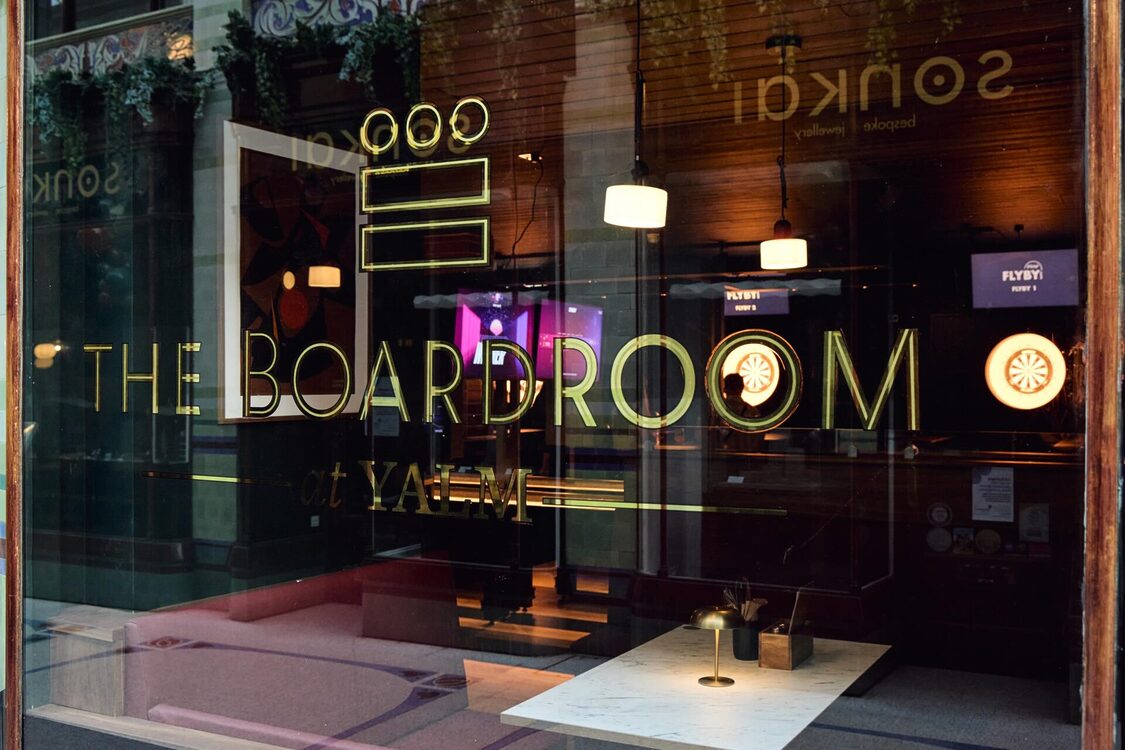
Above: YALM, the food hall in Norwich’s Royal Arcade, features a dedicated social gaming space called The Boardroom. It is open six days a week, generally operating from 10:00 AM until late.
The structural case for why social gaming and food halls belong together – and what it means commercially for operators who get it right.
The UK’s food hall sector grew by 31% in 2025, rising from 114 venues to 149, with 65 more in development. That growth is happening while the rest of hospitality contracts: 789 pubs and bars closed last year in England, Scotland and Wales – double the rate of five years ago.
The reasons are structural. Food halls remove the friction that kills most group nights out – the negotiation over where to go, what to eat, what to spend. Under one roof, a group of eight people with different tastes, appetites, and budgets can each make their own choice, and still spend the evening together. That’s a problem most hospitality venues have never solved.
Social gaming solves the next one.
The problem food halls haven’t solved yet.
A food hall keeps people together. What it doesn’t always do is give them something to do once they’ve eaten. The natural arc of a visit – arrive, graze, leave – is hard to extend without a reason. Social gaming provides that reason. It creates a second act to the visit, keeps groups at the venue longer, and generates a revenue stream that operates entirely outside the kitchen margin.
That last point matters. Game bookings are pre-paid, timed, and priced per player. They don’t depend on food sales or bar spend to generate return. For a food hall operator managing multiple independent vendors and a shared bar, that commercial model is genuinely additive – not just complementary.
What this looks like in practice.
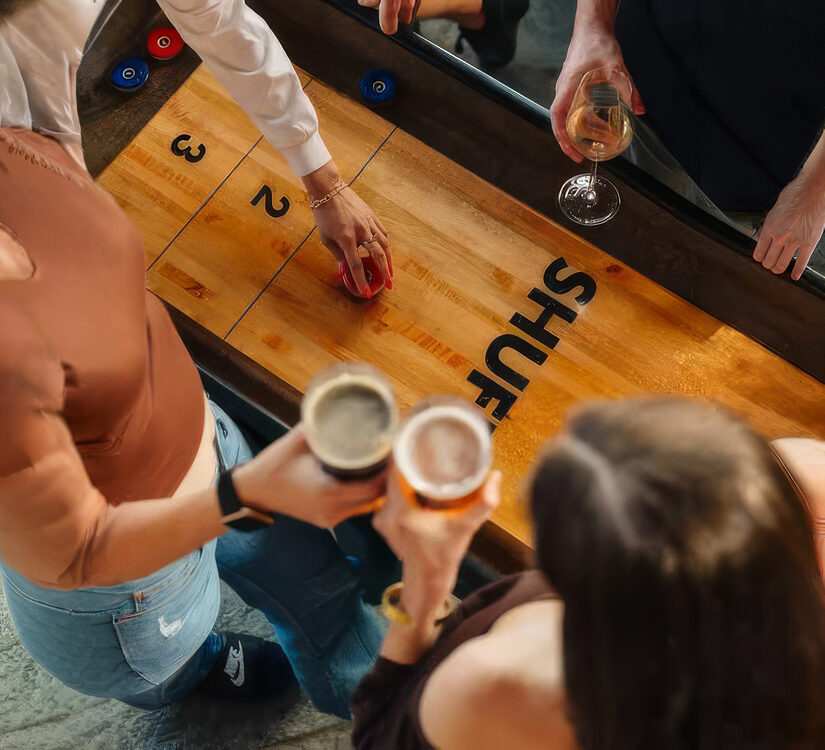
At YALM Food Hall in Norwich, TSGG’s installation of tech shuffleboard (SHUFL Tech) and interactive darts (FLYBY Darts) – including training and ongoing support – has delivered exactly that. Dan Searle, Operations Director at YALM, puts it plainly:
“YALM has always been about bringing people together through great food and drink, so evolving our offer with competitive socialising felt like a natural next step. Since launch we’ve benefitted from a strong new gameplay revenue stream, and seen a positive impact on F&B sales too. A high-quality food hall matched with tech shuffleboard and interactive darts has proved the perfect combo for our customers.”
At Games Hall by Market Halls on Oxford Street, the approach is similar but the format distinct. Games Hall is a dedicated games room within the venue – its own branded space, bookable by the session, available for walk-ins, and built around shuffleboard and interactive darts. The food hall draws the crowd; the games room gives them a reason to stay.
In both cases, the Social Gaming installation didn’t require the venue to reinvent itself. It extended what was already working.
The opportunity for food hall operators
The food hall format is already built for social gaming. The communal layout, the mixed-group audience, the extended dwell time – all of it creates the right conditions. What’s needed is the right product, installed and supported properly, so that the experience holds up night after night.
For operators thinking about what comes next, the question is less “should we add social gaming?” and more “what are we waiting for?”
The Social Gaming Group supplies, installs, and supports social gaming experiences in food halls and multi-vendor venues across the UK and Europe.

Franchise
B2B
You need to load content from reCAPTCHA to submit the form. Please note that doing so will share data with third-party providers.
More InformationYou are currently viewing a placeholder content from Turnstile. To access the actual content, click the button below. Please note that doing so will share data with third-party providers.
More Information