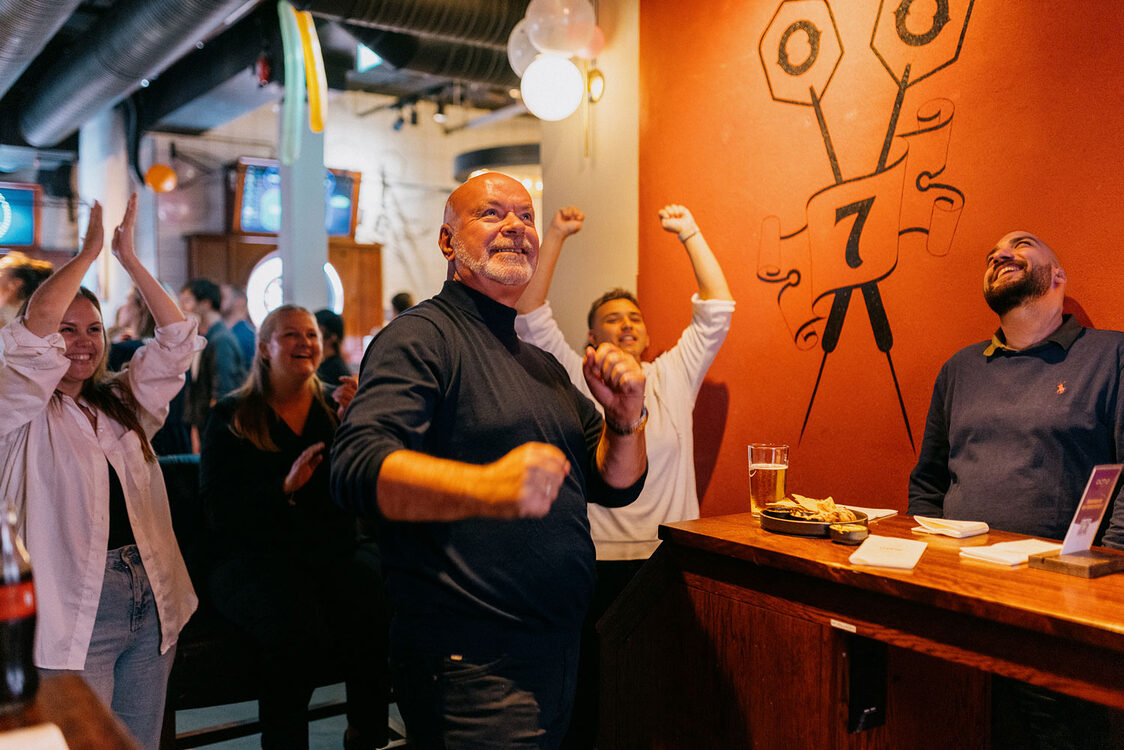
Adults are reclaiming something they were quietly told no longer belonged to them. The venues paying attention are building something that lasts.
Think about the last time you were out with someone – a parent, a colleague, a friend you’ve known for years – and something happened that neither of you planned. A moment of genuine laughter. A small, shared piece of chaos. The kind of thing you still mention months later.
Chances are, there was a game involved.
That’s not nostalgia talking. It’s something more structural – something about what play actually does to a group of people when the conditions are right.
What we gave up without realising
Adulthood has a way of engineering spontaneity out of social life. Not deliberately, but steadily – through packed diaries, the pressure to be productive, and the quiet cultural expectation that serious people don’t need to play. We still go out. We still gather. But somewhere along the way, the permission to be genuinely unguarded with each other became harder to find.
Research published in February 2026 by the University of Auckland offers a useful frame for this. The findings are clear: adults who make regular room for play cope better with stress, experience stronger positive emotions, and report meaningfully higher levels of life satisfaction than those who don’t. The study draws attention to three qualities that play preserves and most adult social settings quietly erode: spontaneity, togetherness, and the freedom to have fun without justifying it.
None of that is soft science. It’s increasingly well-documented evidence that play isn’t a childhood luxury we eventually outgrow – it’s a human need we’ve been persuaded to defer indefinitely – we call it Social Fitness.
Why the generational mix matters
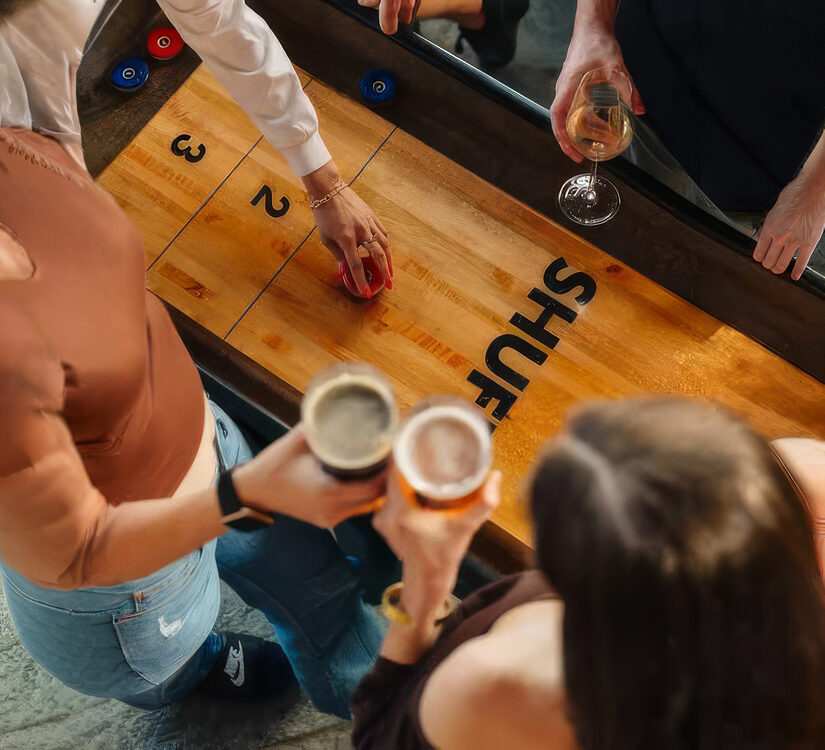
One of the more quietly compelling aspects of competitive socialising is who actually shows up. Not just Gen Z, not just millennials out for a team social – but mixed groups. Parents and adult children. Colleagues spanning a twenty-year age gap. People who wouldn’t ordinarily choose the same night out, finding themselves on the same side of a darts board or the same end of a shuffleboard table.
That dynamic has real weight behind it. Research on intergenerational contact consistently shows that shared play between different age groups reduces the social distance between them faster than almost any other format. Shared goals – even ones as modest as winning a game of darts – create the conditions for what writer Johann Hari describes as “valuable connection”: moments of genuine vulnerability and shared purpose that collapse the distance between people who might otherwise remain politely separate.
The practical version of this is something most venue operators have seen. The group that arrived a little stiff, not quite sure of each other, who left genuinely relaxed. The father and son who spent the first round in parallel and the last round in competition. The colleagues who, somewhere between the second game and the third drink, stopped performing and started actually talking.
These moments don’t happen by accident. They happen because the format created space for them.
What the data reflects
KAM’s 2025 consumer research found that most competitive socialising visitors – across age groups – say they make more lasting memories at these venues than at pubs or restaurants – 83% of them, to be precise. Monthly return rates have risen to 41%, up from 35% in 2023. Over a third report going out more frequently than they did a year ago.
Those numbers point to something beyond category growth. They suggest that people have found something in these formats they weren’t finding elsewhere – and they’re coming back for it.
It’s worth noting that UK nightclub numbers have declined sharply, while themed and activity-led bars have grown by close to 195% since March 2020 according to CGA and NTIA industry data. What’s dying is a version of the night out that asked very little of people. What’s growing is one that asks for genuine participation – and gives something real back in return.
What this means for venues
There’s a commercial argument here, and it’s well-documented: experience-led formats drive longer dwell times, higher group bookings, and stronger repeat visit rates than passive hospitality. But the more interesting point is upstream of the data.
The venues that are genuinely thriving in this space aren’t just offering activity. They’re creating the conditions for real connection – between people who already know each other, and sometimes between people who don’t. That’s harder to replicate than a technology installation. It comes from deliberate decisions about format, atmosphere, and how the experience is designed to unfold.
When it works, the result isn’t just a strong night’s revenue. It’s a venue people talk about. One they bring their friends to. One they bring their parents to.
When did you last bring your father out to play? That question has a commercial answer as well as a human one.
👉 Want to create this kind of experiences in your venue? Get in touch →
Franchise
B2B
You need to load content from reCAPTCHA to submit the form. Please note that doing so will share data with third-party providers.
More InformationYou are currently viewing a placeholder content from Turnstile. To access the actual content, click the button below. Please note that doing so will share data with third-party providers.
More Information