European hospitality is facing a deliberate consumer. The venues winning that decision are the ones with the clearest reason to visit. What happens to food and drink sales when social gaming provides that reason is significant.
The European dining-out market has a structural problem. Circana’s analysis of European foodservice shows that total consumer spending on restaurants has hit record highs, yet total visits are still 10% below pre-pandemic levels. People are spending more per occasion and going out less often. The market is shrinking in frequency while growing in value.
The picture varies across markets – France’s visits remain 9% below 2019 levels, the UK is still 21% down, Germany is forecast to grow modestly at 1.6% in 2026. Poland is a different case: the restaurant sector has grown 35% in venue numbers since 2021, so the challenge there isn’t declining footfall – it’s standing out in an increasingly crowded field. Walking through the centre of Gdańsk earlier this summer, that dynamic was visible firsthand:
“I passed a vast number of restaurants and cafes side by side. Without checking Instagram or Google, it was genuinely hard to choose between them. The easiest approach was simply to follow the crowd. What stayed with me was the question of why some places were empty at peak dinner hours, and others full.”
– Anders Foss, Head of Brand & Marketing, The Social Gaming Group
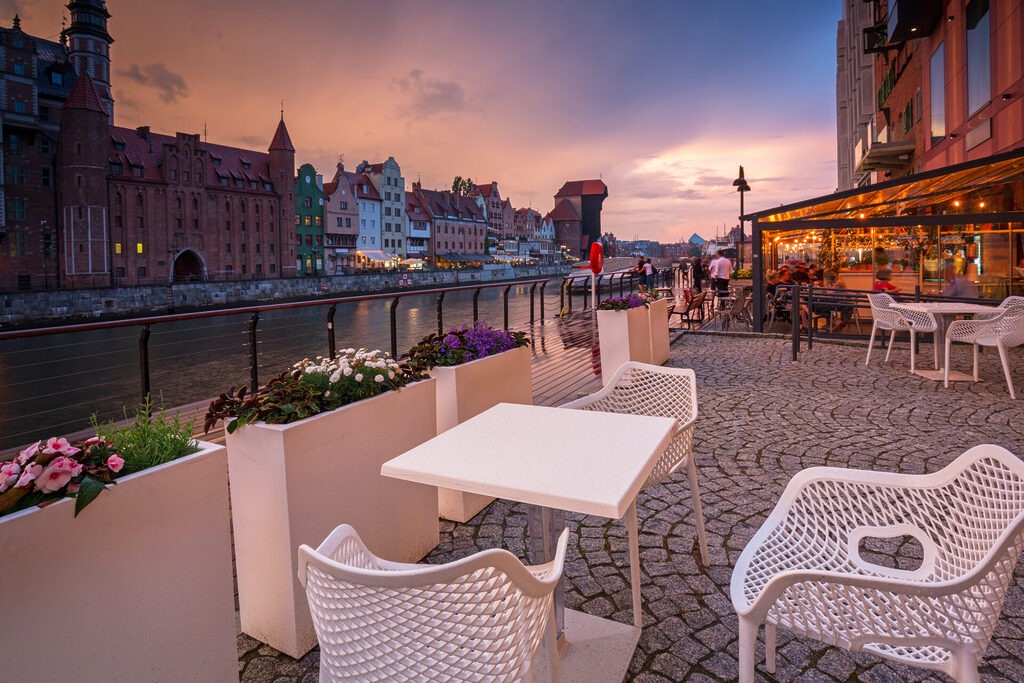
Gdańsk’s Old Town is home to a multitude of different restaurants. On the other side of the Motława River, you can see the historical port crane.
Across all these markets – whether the problem is fewer visits or more competition – the occasions that survive are the ones with a compelling reason to exist beyond a good meal.
The venue that survives the cut
KAM’s 2025 consumer research puts a number on this. When asked which venue they’d drop from a night out including a restaurant, a bar and a competitive socialising venue, consumers cut the competitive socialising venue least often – 20% more likely to survive than a restaurant, and 5% more likely than a bar. Mintel’s 2026 report confirms the commercial logic: experiential formats drive higher spend, with beverage moments before, during and after gameplay among the clearest revenue opportunities.
What happens to food and drink sales
Guests who arrive with a reason to be somewhere stay longer – and longer dwell time drives food and drink spend. Creventa’s 2026 analysis reports that drink pre-ordering in competitive socialising venues can lift wet spend by around 23%. Dan Searle, Operations Director at Yalm Food Hall in Norwich, saw this directly after TSGG’s installation of interactive darts and tech shuffleboard: a new gameplay revenue stream alongside a positive impact on F&B sales. The game brought guests in. The hospitality kept them spending.
Designed to play, eat and drink at the same time
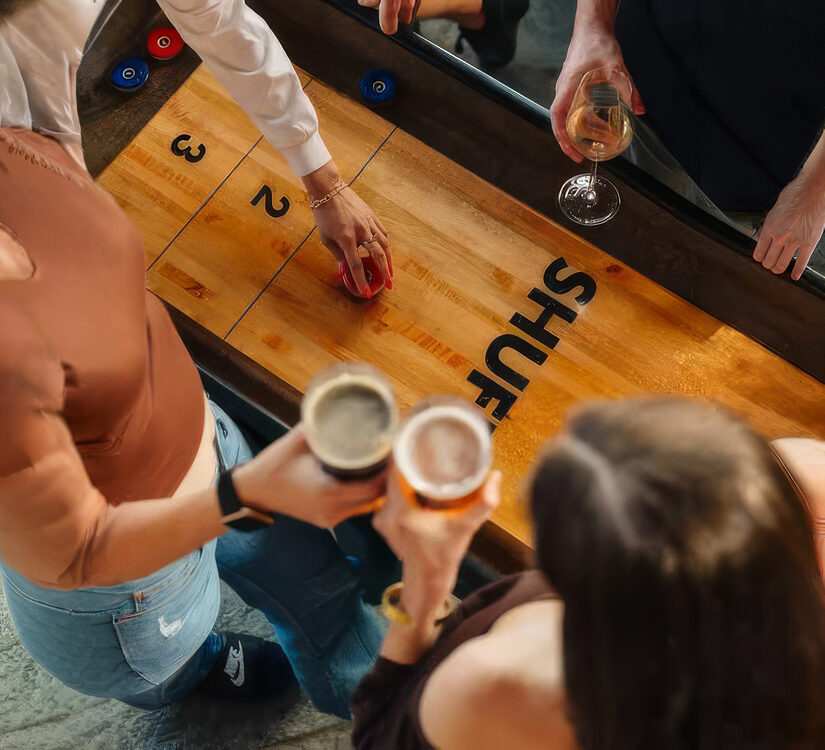
TSGG’s social games are designed so guests can eat and drink while they play. Shuffleboard is played standing at a table – drinks sit naturally to the side. Interactive darts is played in rounds, with natural pauses between turns. Neither format requires guests to stop eating or drinking to participate. The game extends the visit; the food and drink revenue follows.
Food and beverage remain the largest segment of a European hospitality market estimated at €1.6 trillion in 2026. The venues best placed to capture their share of it are the ones that give guests a clear reason to stay at the table.
The Social Gaming Group works with operators across Europe – designing social gaming experiences that keep guests engaged, comfortable and spending.
👉 Talk to us about social gaming for your venue or restaurant →

Franchise
B2B
You need to load content from reCAPTCHA to submit the form. Please note that doing so will share data with third-party providers.
More InformationYou are currently viewing a placeholder content from Turnstile. To access the actual content, click the button below. Please note that doing so will share data with third-party providers.
More Information